
When New Equipment Arrives Without a Spares Strategy
Incomplete manuals and missing BOMs leave maintenance teams exposed. AI-assisted spares planning builds an evidence-based critical-spares register.

How AI-assisted critical spares planning helps discrete manufacturers protect uptime from day one
A new machine should increase production capacity- not introduce a new maintenance blind spot.
Yet this is a common challenge in discrete manufacturing. Equipment is purchased, installed and commissioned, but the maintenance team receives incomplete documentation, inconsistent bills of materials or no clear critical-spares register. The result is predictable: a component fails, the team begins investigating what is needed, suppliers are contacted, and production remains unavailable while the correct part is identified and delivered.
For manufacturers operating under demanding production schedules, this is more than a documentation problem. It is a readiness gap that can convert a manageable component failure into unplanned downtime, delayed orders and avoidable operational cost.
AI can help close that gap.

The hidden risk in equipment handover
Equipment manuals and engineering documents often contain the information needed to prepare for future maintenance: component names and descriptions, manufacturer and part numbers, equipment hierarchy and subassemblies, recommended replacement intervals, maintenance requirements, operating limits and technical specifications, warnings about wear or failure, and references to interchangeable parts.
However, this information is rarely presented in one standardized format. It may be distributed across manuals, technical drawings, supplier documents, commissioning records and spreadsheets. Some documents may be scanned PDFs, while others use different naming conventions or incomplete identifiers.
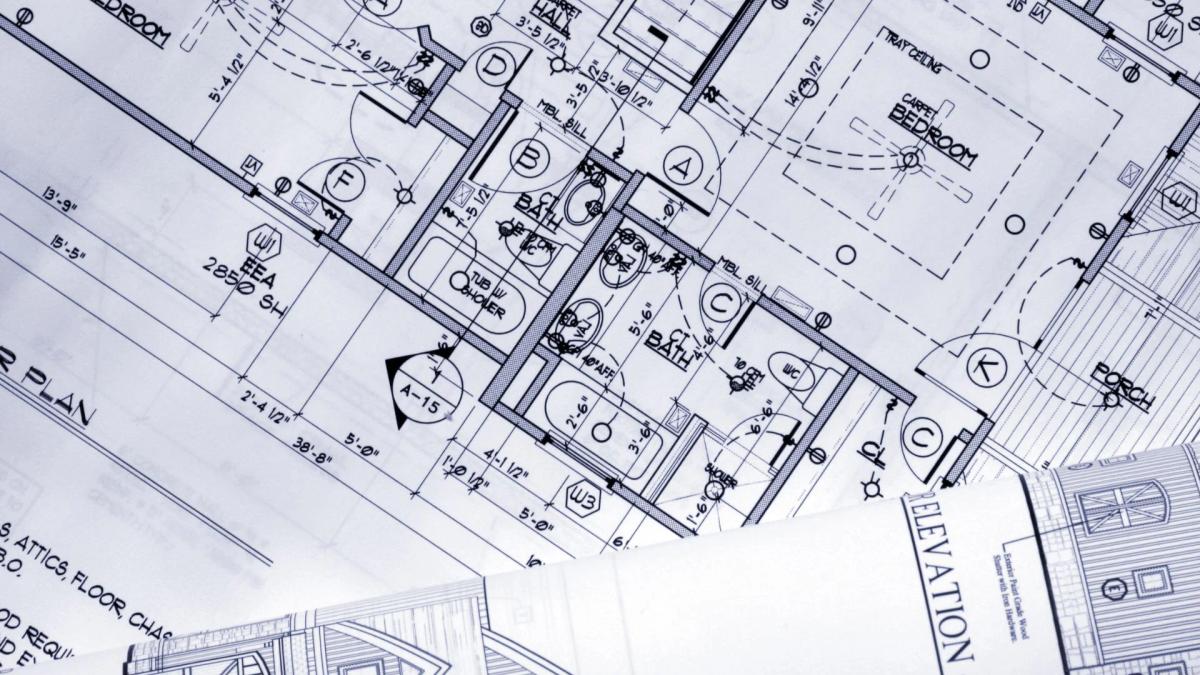
As a result, maintenance teams may have to manually search through hundreds of pages before they can answer basic questions: which components are most important to production, which parts have long supplier lead times, which items should be stocked locally, which components are shared across multiple machines, whether the parts are already available in inventory, and when replenishment should be triggered.
Without a structured spares strategy, organisations are often forced into one of two inefficient choices: overstocking expensive parts “just in case” or accepting the risk of waiting until a failure occurs.

From documents to a critical-spares register
INSUS’s AI-assisted critical spares planning use case is designed to create an initial, evidence-based spares register from the information the organisation already possesses.
The process begins by extracting relevant information from equipment BOMs, manuals and engineering documentation. AI identifies components, part references, maintenance instructions and other technical details, then organises them into a structured view that maintenance and supply-chain teams can review.
The resulting register can include equipment context such as asset, line and machine; component identity including description, manufacturer and part number; maintenance relevance such as replacement intervals or failure warnings; supply information including lead time and supplier; operational importance based on impact on production or safety; inventory position showing on-hand quantity and reorder status; and review status indicating whether the item has been validated or requires engineering confirmation.
The objective is not to replace engineering judgement. It is to reduce the manual effort required to find, structure and prioritise the information that engineers need to make informed decisions.
This gives the maintenance organisation a practical starting point: an initial critical-spares register that can be validated, enriched and connected to operational data.

Moving beyond a static parts list
A document-derived BOM (Bill of Materials ) is useful, but it is only the first step.
A part appearing in a manual is not automatically a critical spare. Its importance depends on the operating context. A low-cost component may cause a production line to stop, while a more expensive part may be readily available, shared across assets or replaceable within a planned maintenance window.
To support better stocking decisions, the AI-generated register can be combined with maintenance work orders, failure and breakdown history, mean time between failures, mean time to repair, equipment criticality rankings, current inventory levels, supplier lead times, purchase orders and delivery performance, historical consumption, and commonality across machines or production lines.
This creates a more complete view of spares risk. For example, the system may identify a motor control component that has a long supplier lead time, a history of repeated failures, a high impact on line availability, no equivalent part currently in stock, and several installed assets dependent on the same component. That combination provides a stronger basis for prioritising the item than any single data source could provide on its own.

How the use case works
An AI-assisted critical spares planning workflow can be structured around five stages.
- The system first ingests equipment documentation, processing available manuals, BOMs, technical specifications, drawings and supplier documentation. It can identify relevant content even when information is spread across different file types or document structures.
- Next, it extracts and normalises component data. AI identifies component descriptions, references, part numbers, equipment relationships and maintenance recommendations, and helps identify variations in naming- for example, where the same component is described differently in a supplier manual and an internal inventory system.
- The extracted information is then organised into a searchable, structured register. Missing fields, ambiguous references and duplicate components are flagged for review instead of remaining hidden in documents.
- The register is enriched with maintenance and inventory data by connecting to available maintenance, procurement and inventory sources. This allows the organisation to compare technical recommendations with actual failure patterns, stock positions and supply constraints.
- Finally, the output supports stocking and replenishment decisions. Maintenance, materials and procurement teams can use the enriched register to prioritise actions such as stocking a new critical spare, increasing minimum stock levels, establishing reorder points, identifying long-lead items for planned procurement, consolidating duplicate part records, reviewing obsolete or unused stock, validating alternative components, or escalating parts for engineering confirmation.
The result is not simply a list of parts. It is a decision-support layer for maintenance readiness.

The INSUS difference: from AI concept to operational system
For this use case to create value, document extraction alone is not enough. The solution must work within the manufacturer’s existing operational environment.
That means connecting technical information with the systems and processes that maintenance teams already use, including enterprise asset management, computerized maintenance management, inventory, procurement and warehouse platforms. It must also account for legacy systems, fragmented data and the governance requirements of industrial environments.
This is where INSUS positions itself differently.
INSUS is not simply a data science firm delivering an isolated model, and it is not a consulting firm that stops at recommendations. INSUS is an industrial AI execution partner, focused on turning AI use cases into production-grade operational systems.
For critical spares planning, that means connecting engineering documentation, maintenance history, inventory data and operational decision-making. The approach is designed to support real industrial conditions, including existing OT and IT environments, fragmented documentation and data sources, on-premise or sovereign deployment requirements, engineering validation and human oversight, multi-site rollout across plants and operating entities, and ongoing improvement after deployment.
The AI may create the initial register, but the operational system must remain reliable, secure, explainable and usable by the people responsible for asset performance.
A practical path to implementation
Manufacturers do not need to digitise every asset before starting. A focused deployment can begin with one production line, equipment family or recently installed machine.
A practical implementation could include selecting a representative equipment group with a known spares-readiness gap, gathering manuals and maintenance records, extracting and structuring the relevant component information, validating the initial register with maintenance and engineering specialists, prioritising components using equipment criticality and supply data, connecting approved recommendations to existing workflows, measuring improvements in readiness and avoidable downtime risk, and scaling the validated approach across additional assets or plants.
This model supports a controlled transition from a targeted use case to a repeatable industrial capability.

From reactive sourcing to planned resilience
The value of critical spares planning is not limited to having more parts on a shelf. It is about knowing which parts matter, why they matter and what action should be taken before a failure affects production.
When equipment documentation is converted into structured operational knowledge- and then combined with real maintenance and inventory data- manufacturers can make spares decisions with greater speed and confidence.
For the industrial manufacturers, this is an important step in moving from fragmented AI initiatives to scalable industrial execution.
INSUS helps organisations make that transition by deploying AI where it creates measurable operational value: inside real plants, connected to existing environments and designed to scale beyond a single pilot.
From AI complexity to sovereign industrial execution, INSUS helps manufacturers turn maintenance readiness into a production advantage.