
GEO vs SEO: Why AI Search Now Decides Whether Your Brand Exists
A deep dive into how Generative Engine Optimization (GEO) is replacing traditional SEO, why AI-driven search determines your brand’s online presence, and what you must adapt to stay visible.

From Google Rankings to Letting AI Know You Exist
Based on insights from a Monday Mansion webinar with Dr. Samantha North
Okay, SEO isn't totally dead. But let's talk about what's actually happening.
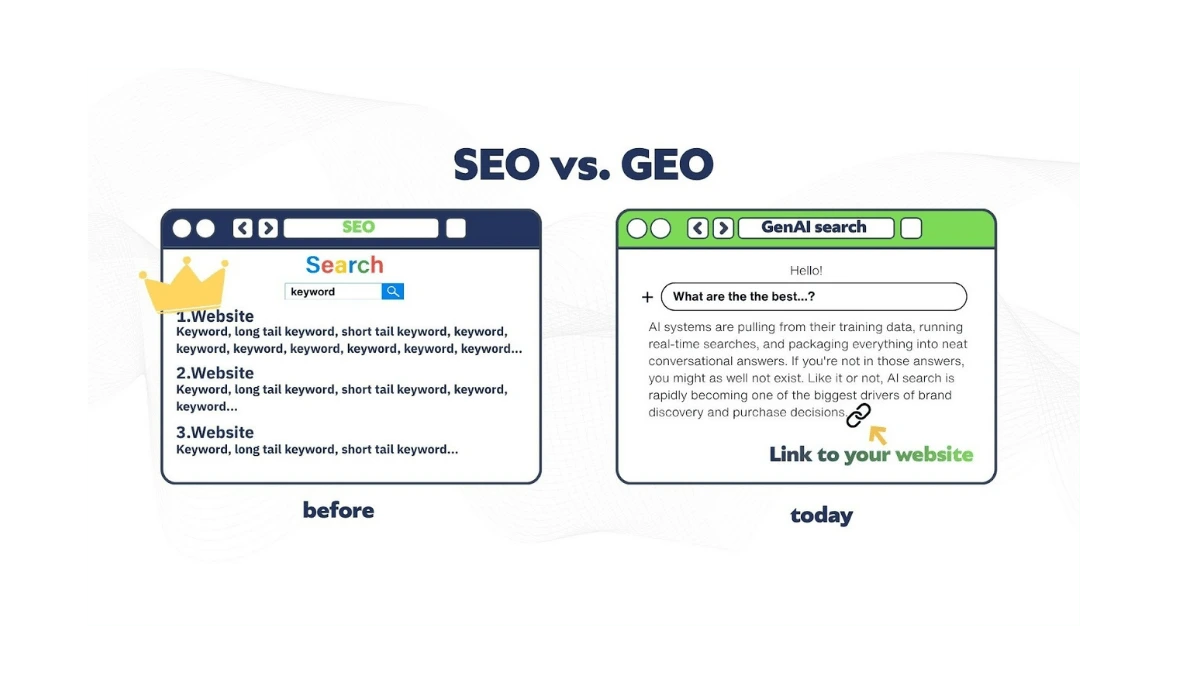
For years, the game was simple: nail your keywords, climb the Google rankings, watch the traffic roll in. Now? We're in a totally different world. Generative Engine Optimization (GEO) isn't about ranking #1 on a search results page. It's about whether ChatGPT, Perplexity, or Claude actually mentions your brand when someone asks a question.
These AI systems are pulling from their training data, running real-time searches, and packaging everything into neat conversational answers. If you're not in those answers, you might as well not exist. Like it or not, AI search is rapidly becoming one of the biggest drivers of brand discovery and purchase decisions.
Why you should care
This isn't just about traffic vanity metrics. Here's what changes when AI knows who you are:
- Get smarter customers: people finding you through AI show up already informed. They've seen comparisons, understood your value prop, gotten context, all before they even click. No more explaining from square one
- Control the narrative: what are AI models saying about you right now? If it's bad or incomplete, you can fix it. But first, you need to know. Understanding your AI footprint means you can actually shape how you're positioned
- Get free market research: track which questions trigger mentions of your brand and how you stack up against competitors. And do it real-time
So here's your homework: Open ChatGPT or Claude right now and ask about your brand. Ask if they'd recommend you. When they don't, ask why. The answers might hurt, but they'll also show you exactly where your digital presence is failing. What to pay attention to?
- How often different AI platforms mention you
- What questions actually trigger recommendations
- Which of your pages AI models reference
- Where you appear versus your competitors
All these show you what's working and what's a total waste of time.
Creating content appealing to AI
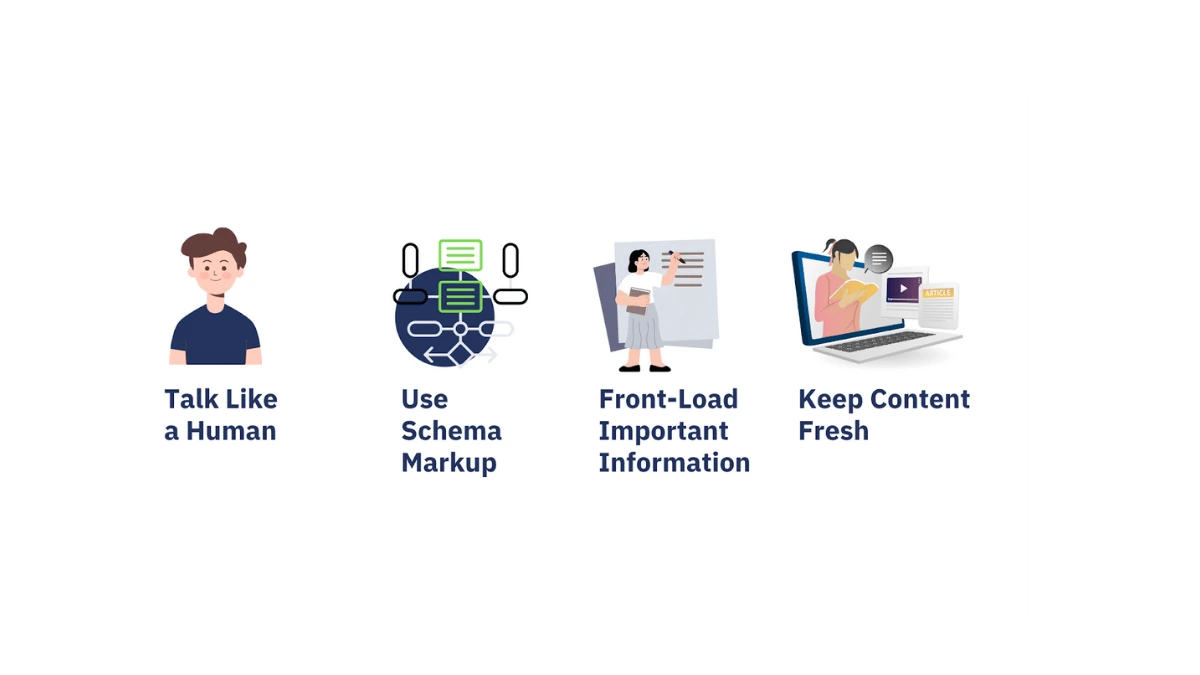
- Talk like a human
Ditch the keyword-stuffed headlines. Write them like actual questions people ask. "How do I fix X?" not "X Solutions for Maximum Y Optimization." AI models match conversational queries to conversational content. Simple.
2. Load everything important
AI systems love content that gets to the point fast. Structure it with this in mind:
- Key takeaways at the very top
- Summary boxes that capture the essence
- Clean sections that each answer one specific thing
3. Use schema markup in every page
Add structured data (JSON-LD) on every single page, not just your showcase content. This literally tells AI models what your content is about, how it connects, and what questions it answers. It's like speaking directly to the algorithm in its native language.
4. Keep the content fresh
AI models care even more about freshness than Google did. Regular updates = you're current and reliable. Old, stale content = you're probably not worth citing.
What is most likely to get you mentioned?
- Specific product recommendations: "Best [exact product] for [specific scenario]" crushes it. Be concrete
- Real comparisons to peers and competitors: "[You] vs. [Competitor]" helps AI give balanced recommendations. Skip the marketing baits. Focus on authentic differences. AI can smell hype from a mile away and will ignore you
- Alternative angles: "Alternatives to [Big Brand]" is absolute gold if you're trying to break into an established market
- One idea per section: write clearly. No jargon. Don't try to sound smart if it makes you confusing or misleading. This works for SEO, GEO, and basic human communication.
- Back up your claims: cite sources. Use real data. When AI sees you're using credible references, you become credible by association
- Practical How-Tos: actionable guides beat abstract theory every single time. Got gated content? Create companion blog posts that share the main ideas and link to the full version
- Lists and comparisons: "Best of" lists and side-by-sides match exactly how people query AI systems
Building authority that lasts
Authority is compound interest. Play the long game.
- Connect with journalists who need expert sources like HARO and similar platforms
- Earn press mentions and use media coverage to boost how AI views your authority
- Run old-school PR campaigns.It's expensive and feels dated, but a proper PR campaign accelerates credibility faster than almost anything else
- Don't ignore Reddit and Quora: Here's where it gets interesting. AI models trust these platforms because they see them as authentic, unfiltered human conversation. But participate genuinely. These communities will destroy you if you show up with corporate-speak
AI actively avoids:
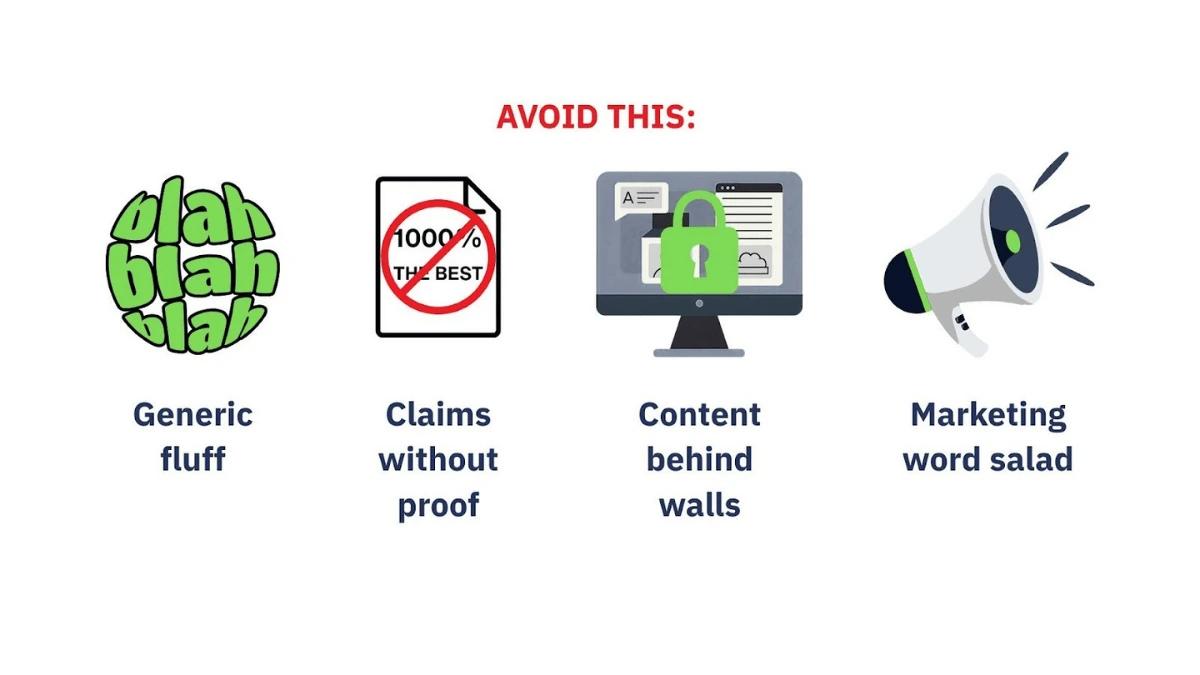
- Generic fluff that adds zero value
- Claims without proof: no data, no citations, no credibility
- Content behind walls: email gates, JavaScript pop-ups, login requirements. AI needs free access to verify your content
- Marketing word salad: if it reads like a press release instead of useful data, it’ll get ignored
But no, there is no universal template for how to go about it: build your custom one.
If you are already getting AI mentions, don't blow everything up. Make smart tweaks to amplify what's working.
If you’re starting from zero, focus on the middle and bottom of the funnel first. Launch aggressive digital PR to build credibility fast. Work with journalists to create stories around your products that naturally generate links and mentions.
And always start with a reality check as previously mentioned. Seriously, go ask ChatGPT or Claude about your brand right now. That response tells you A LOT.
The bottom line
The fundamentals haven't changed (quality content, credible sources, clear structure) but the execution has evolved completely. AI search rewards genuine expertise, conversational clarity, and verifiable authority.
The brands that move on this now will own visibility for the next five years. The opportunity window is wide open while your competitors are still Googling "what is GEO." Start optimizing today, or spend the next five years invisible to the fastest-growing search channel on the planet. Your call.
Ready to see where you actually stand? We'll run a comprehensive AI visibility audit for your brand, showing you exactly what ChatGPT, Claude, and Perplexity are saying about you (or not saying), where the gaps are, and which quick wins will move the needle fastest. Let’s talk.