
From Standard Operating Procedures to Consistent Execution: GenAI-Powered Golden Run Monitoring
An SOP says how a process should run. It doesn't tell you whether it did. How GenAI-powered golden-run monitoring verifies SOP execution shift after shift.
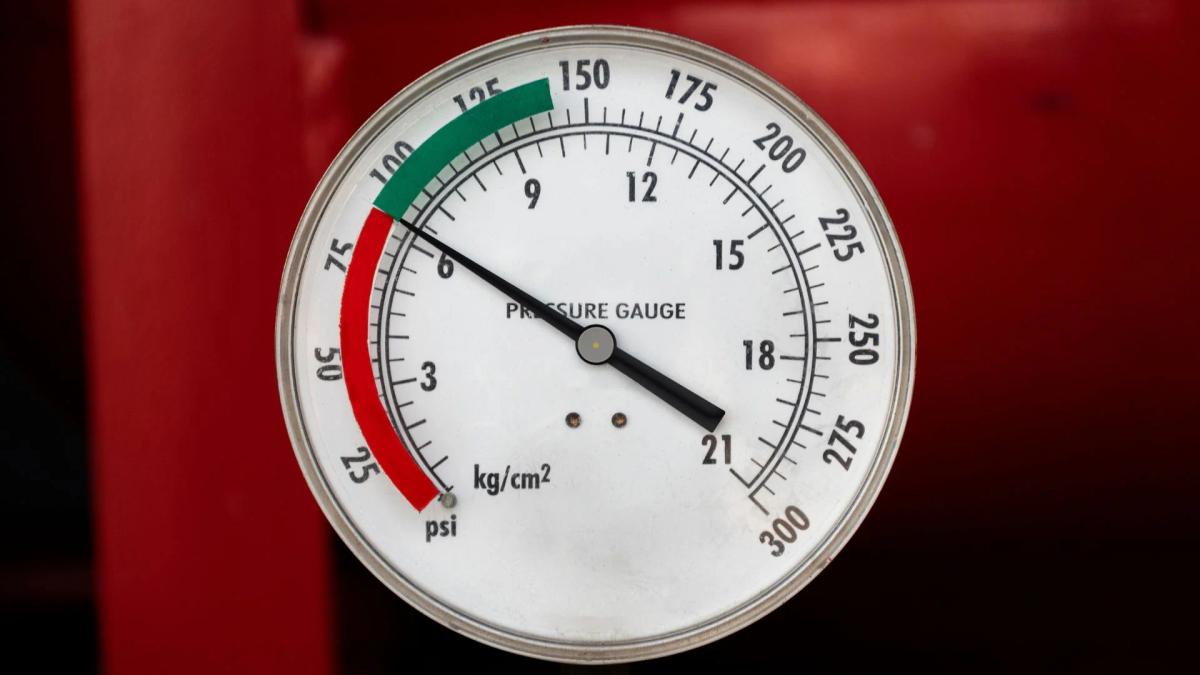

In multi-shift manufacturing, the same process is expected to deliver the same result regardless of who operates the line, when the run takes place, or how quickly the workforce is growing.
In reality, consistency is hard to sustain. Experienced operators make practical adjustments based on judgement. New employees learn through a mix of formal training and informal handovers. Shift teams may interpret the same work instruction differently. Small changes in setpoints, timings, material handling, machine modes, or changeover execution can accumulate into unstable processes, variable quality, rework, and avoidable investigation effort.
The issue is not always that standard operating procedures (SOPs) are missing. More often, organisations lack continuous visibility into whether the SOP is being executed within the validated operating profile during live production.
A GenAI-powered golden-run monitoring capability closes that gap. It combines real-time industrial data, approved reference profiles, statistical and machine-learning-based deviation detection, and generative AI to explain what changed, why it may matter, and what teams should check next.
The hidden cost of shift variation
A manufacturing process may have a validated production run that consistently meets required quality, safety, yield, and performance outcomes. Yet the parameters and execution pattern from that successful run are often not actively used as a reference for subsequent production.
Over time, operators may make reasonable local adjustments, respond to changing conditions in different ways, or apply work instructions with slight variation. Individually, these differences can look insignificant. In combination, they can alter the actual process behaviour.

Common sources of variation include:
- Temperature, pressure, flow, and speed setpoints.
- Cycle times, hold times, and sequence timing.
- Dosing rates, material quantities, and raw-material handling.
- Machine operating modes and equipment settings.
- Start-up, shutdown, cleaning, and changeover routines.
- The timing and order of manual interventions.
Final inspection may reveal the outcome only after a batch is complete or a product has moved downstream. By then, teams face a reactive quality investigation: they need to reconstruct what happened, determine when the process diverged, and identify whether the cause was equipment, material, procedure, or execution.
The business impact can include rework, scrap, delayed release, lost capacity, higher energy consumption, customer risk, and repeated engineering effort.
What is a golden run?
A golden run is an approved, validated production run that represents how a process should operate under defined conditions. It is not simply the fastest run, the most recent successful batch, or an idealised target created in a spreadsheet.
A credible golden run is selected because it achieved the required combination of quality, safety, throughput, yield, and process-performance criteria. It becomes an operational reference profile for a specific product, line, equipment configuration, and production mode.
That profile may include:
- Setpoints and actual sensor readings.
- Expected operating ranges and rate-of-change limits.
- Stage, recipe, and sequence timing.
- Equipment states and manual-operation events.
- Relationships among parameters, such as temperature, pressure, speed, and material flow.
- Quality outcomes, laboratory results, and release status.
This multivariable view matters. A temperature value may be acceptable in isolation, but risky when it occurs with the wrong mixing speed, pressure profile, raw-material lot, or hold time. A golden run therefore captures how the process behaves as a system—not just whether individual tags remain inside static limits.
From SOPs on paper to SOPs in execution
An SOP defines how a process should be performed. Golden-run monitoring verifies whether the process is being performed consistently in live production.
That distinction is important. A procedure can be documented, approved, and communicated, while actual execution still differs across shifts, sites, products, or equipment configurations. Traditional alarms can identify individual values that cross a limit, but they may miss the combined process pattern that signals early drift.
Golden-run monitoring compares the current run with the approved operating profile in real time. It can consider values, sequence timing, equipment state, parameter interactions, and process phase. The system can detect when production starts to move away from an expected pattern—even if each individual variable remains inside its nominal range.
For example, mixing speed, temperature, and cycle time could all remain within permitted limits. However, a faster speed combined with lower temperature during the first part of the cycle may differ materially from the validated pattern and create a later viscosity, yield, or quality risk.
The objective is not to penalise every difference from a reference run. Manufacturing naturally varies. The objective is to distinguish acceptable operating variation from deviations that are likely to affect quality, yield, safety, process stability, or asset health.
Where GenAI adds value
Machine learning, process analytics, and statistical methods should remain the core engines for calculating deviations. They are responsible for comparing live data to the approved golden-run profile, quantifying the severity of drift, and identifying abnormal multivariable patterns.
Generative AI adds the interpretation and action layer. It translates complex industrial signals into a clear, auditable conversation with operators, shift leaders, process engineers, and quality teams.

A GenAI-powered Golden Run SOP Copilot can use structured deviation events together with SOPs, work instructions, quality records, maintenance history, prior investigations, and approved corrective actions. It can then provide four forms of operational support.
Explain the deviation
Instead of an alert containing only tag names, thresholds, and timestamps, the copilot can produce a plain-language explanation:
During start-up on Line 2, mixing speed was above the approved golden-run trajectory for 12 minutes while temperature recovery was slower than expected. This combination differs from the validated start-up profile and may increase viscosity variability.
The explanation should include the production phase, affected parameters, duration, degree of deviation, and potential operational impact. It should always link back to the underlying evidence rather than presenting an unsupported conclusion.
Connect deviations to SOP steps
The copilot can retrieve the relevant approved SOP or work instruction and identify the steps that should be reviewed. For example:
- Confirm that pre-heating duration followed the required start-up instruction.
- Verify the mixer-speed setting specified for the active recipe and product configuration.
- Check whether the raw-material lot requires an approved adjustment.
- Review whether the changeover checklist was completed before production began.
This creates a practical bridge between production data and procedural knowledge. Instead of asking teams to search across documents, historian trends, and shift notes, the system brings the most relevant evidence together around the live event.
Recommend next-best actions
Recommendations should be ranked, contextual, and governed. The system can suggest checks, inspections, or approved response steps based on the deviation pattern, process phase, and prior cases.
For example:
- Inspect the current batch against the defined in-process viscosity checkpoint.
- Verify pre-heating and mixer configuration before the next cycle.
- Compare the current raw-material lot with lots used in approved runs.
- Request an engineering review if the deviation persists beyond the approved recovery window.
For safety- or quality-critical processes, GenAI should remain advisory. It should not autonomously change control parameters unless that action is explicitly engineered, validated, approved, and governed within the plant control architecture.
Accelerate investigations and learning
When a deviation becomes a quality event, the copilot can prepare an investigation brief: a timeline of divergence, affected process phases, relevant SOP sections, similar historical events, possible contributing factors, and the data still needed for confirmation.

It can also capture engineer and operator feedback: whether the alert was useful, what root cause was confirmed, which action was taken, and what outcome followed. This creates a controlled learning loop that improves alert relevance, recommendation quality, SOP content, and training priorities over time.
A production-grade architecture
A reliable implementation needs more than an LLM connected to a dashboard. It requires a layered industrial architecture.
Industrial data foundation
Connect the sources that describe both the process and its context:
- PLC, SCADA, DCS, and industrial historian data.
- MES, batch, recipe, and production-order information.
- Quality management systems, LIMS results, and release decisions.
- CMMS or maintenance work orders and equipment-event history.
- SOPs, work instructions, changeover checklists, and training materials.
- Operator shift notes, approved deviations, and investigation reports.
Each production run should be contextualised by product, recipe, equipment configuration, line, production phase, shift, raw-material lot, and other operational variables that materially affect the process.
Golden-run profile management
Most plants need more than one golden run. Reference profiles may differ by product family, line, equipment version, operating mode, raw-material category, or approved local condition.
Every profile should include ownership and governance metadata:
- Approval status and approving role.
- Validity period and applicable operating conditions.
- Quality and performance evidence used for validation.
- Version history and reason for change.
- Defined limits, relationships, and escalation rules.
This prevents the organisation from treating an outdated successful batch as permanent truth. Golden-run profiles must evolve through controlled engineering and quality processes when the process is intentionally improved.
Real-time deviation intelligence
The analytics layer continuously scores live production against the active reference profile. It should combine methods appropriate to the process maturity and available data:
- Rule-based checks for known critical conditions.
- Statistical process control for expected variation and drift.
- Multivariate analysis for parameter interactions.
- Time-series similarity and sequence analysis for process phases.
- Anomaly-detection models for patterns not captured by fixed thresholds.
The output should be a structured deviation event: what diverged, when it began, how severe it is, which production phase is affected, what evidence supports the finding, and which workflow should be triggered.
GenAI with retrieval and guardrails
GenAI should use retrieval-augmented generation (RAG) to ground its responses in approved and relevant plant knowledge. For each event, retrieve only the applicable SOP sections, golden-run version, product and equipment context, relevant quality specifications, and comparable prior cases.
The copilot should be designed to:
- Cite the source records used in its explanation.
- Clearly separate observed facts from hypotheses.
- State uncertainty and request further checks when evidence is insufficient.
- Use approved action libraries rather than inventing control actions.
- Log prompts, retrieved evidence, outputs, user feedback, and final disposition.
- Respect role-based access, data sovereignty, cybersecurity, and OT/IT segmentation requirements.
Operating model: detect, explain, verify, improve
The value comes from an operating loop, not only from an alert.
1. Detect: Compare live production to the approved golden-run profile and identify a meaningful deviation.
2. Explain: Present the deviation in process language, including timing, affected parameters, severity, and probable consequence.
3. Verify: Guide the operator or engineer to check relevant SOP steps, equipment conditions, materials, and quality indicators.
4. Recommend: Propose approved next-best actions and appropriate escalation based on risk and context.
5. Learn: Record what was confirmed, what action was taken, and whether the action restored the process or prevented a quality issue.
6. Improve: Use aggregated evidence to update training, SOP clarity, alert design, preventive-maintenance priorities, and, through formal governance, golden-run profiles.
This model supports the workforce rather than surveilling it. The goal is to make process knowledge visible and usable at the moment decisions are made, while retaining human judgement and accountability.

Use cases across the plant
A GenAI-powered Golden Run SOP Copilot can support several high-value workflows.
Shift-leader copilot
When a live deviation occurs, the shift leader receives a concise explanation, the relevant SOP checks, a recommended response, and the required escalation path. This reduces time spent interpreting raw trends and coordinating across production, quality, and engineering.
Quality investigation copilot
For a failed or borderline batch, the system assembles a chronological deviation history, related process context, comparable historical cases, relevant quality records, and a structured investigation draft. Engineers retain responsibility for determining root cause and approving CAPA actions.
SOP improvement assistant
At weekly or monthly review, GenAI can summarise recurring deviation patterns and identify procedures with persistent execution variation. Teams can use this evidence to clarify ambiguous steps, redesign checklists, formalise good operator practices, and target refresher training.
Onboarding and cross-site knowledge transfer
New operators can ask questions in natural language about the expected process behaviour for a product and line. The assistant can explain why a step matters, show approved operating ranges and sequences, and surface the conditions under which a local variation is permitted.

Governance is non-negotiable
Golden-run monitoring becomes operationally trusted only when production, process engineering, quality, and IT/OT teams agree on how it is governed.
Key principles include:
- A golden run is approved, versioned, and applicable only under defined conditions.
- Alerts are explainable, evidence-backed, and calibrated to operational risk.
- Recommendations are tied to approved procedures and escalation policies.
- Operators and engineers can challenge, annotate, and correct the system.
- Quality-critical and safety-critical actions remain under human and validated-control authority.
- Model performance, false positives, false negatives, and drift are monitored continuously.
- All decisions and changes are traceable for audit and continuous improvement.
This prevents two common failures: creating a rigid system that blocks legitimate process improvement, and deploying an opaque AI tool that teams do not trust.
Start small, prove value, scale
A practical deployment does not need to begin with a full factory transformation. Start with one line, product family, or process step where the business problem is visible: recurring shift variation, quality holds, difficult start-ups, long changeovers, or repeated investigations.
A focused pilot should establish:
- One or two approved golden-run profiles.
- A limited set of critical process parameters and process phases.
- Clear criteria for meaningful deviation.
- A small library of approved response actions.
- A measurable business baseline, such as rework, scrap, quality holds, investigation time, or yield variability.
Run the system in shadow mode first. Let it detect, explain, and recommend without changing operations automatically. Compare its findings with engineer judgement, collect feedback, tune the deviation logic, and validate the operating workflow before scaling across lines, products, shifts, and sites.
From complexity to operational control
Manufacturers do not need another disconnected AI dashboard. They need an operational capability that converts validated process knowledge into consistent execution.
Golden-run monitoring provides the quantitative foundation: continuous comparison of live production with an approved process profile. GenAI provides the practical interface: it explains deviations in context, connects them to SOPs, recommends approved next steps, and captures learning from every production event.
Together, they help manufacturers move from reactive investigations to earlier intervention; from static SOPs to verified execution; and from reliance on informal, shift-specific knowledge to a governed, scalable operating model for industrial performance.
The ultimate objective is simple: prevent small deviations from becoming larger quality, yield, safety, and customer failures—while giving operators and engineers better information at the point of action.
Where to start
Golden-run monitoring only works if the procedural knowledge underneath it is trustworthy and current. That is what ExpertFlow AI is built for — governed SOP ingestion, source-linked retrieval so every answer cites its record, and step-by-step copilots at the point of work.
If you want to scope a shadow-mode pilot on one line, talk to our team.